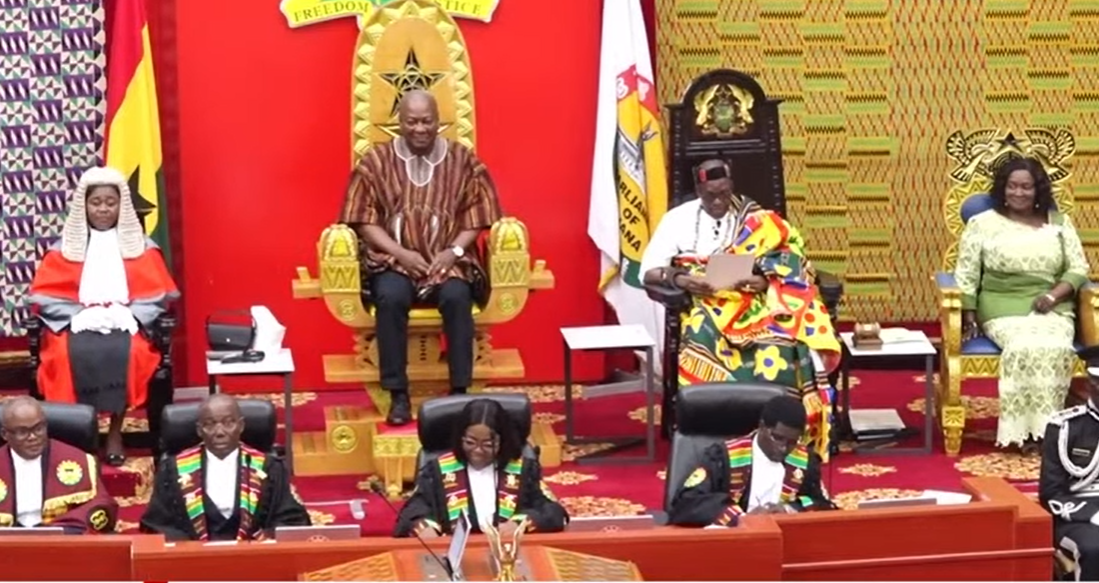
President Mahama delivers State of the Nation Address (SONA)
Ghana stands at a critical juncture in its energy and industrial development, and much of the attention now turns to whether President John Dramani Mahama can propel the nation into the nuclear age. His second term, which began amid considerable public anticipation, has already delivered notable achievements that strengthen the country’s foundation for ambitious projects like nuclear energy. [Ghana’s Nuclear Energy Plans]
Current Achievements
Economically, Mahama’s administration has made significant strides. Measures aimed at easing the cost of living, including targeted tax reliefs and reductions, have lessened the financial burden on households and businesses alike. The Ghanaian cedi has gained strength against major currencies, the government has brought inflation under tighter control, and credit rating agencies have improved the country’s sovereign credit rating significantly. These developments are crucial because a stable economic environment is a prerequisite for the high-capital, long-term investments required in nuclear energy projects.
In the energy sector, Ghana has also experienced meaningful progress. Fuel prices have decreased substantially, power outages have become infrequent—a remarkable achievement given previous energy shortages. While the country has relied on hydro, thermal, and solar power, the government recognizes that these sources alone cannot sustain the level of industrialization envisioned for the coming decades with the nation’s electricity supply now almost matching demand. Nuclear energy is therefore being positioned as a strategic solution to provide reliable baseload power and support economic transformation.
Ghana’s Nuclear Energy Plans
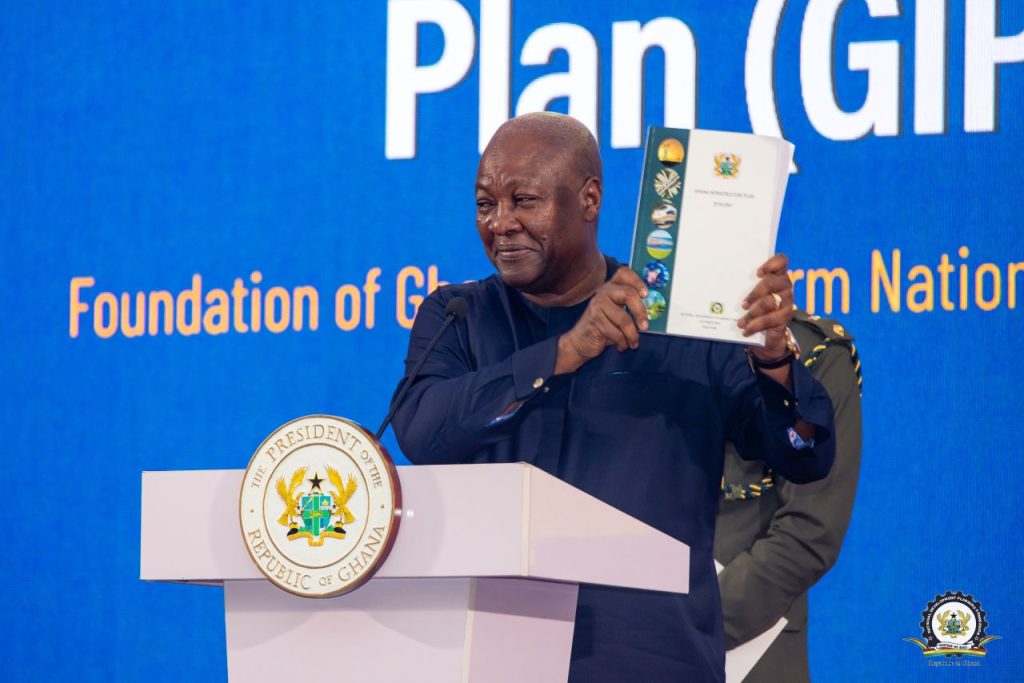
On October 22, 2025, the National Development Planning Commission (NDPC) launched the Ghana Infrastructure Plan (GIP), a comprehensive blueprint for the country’s long-term development. President Mahama graced the event held at the College of Physicians and Surgeons in Accra and stressed the importance of a unified, non-partisan approach to national infrastructure projects. Among the highlights of the GIP was a bold vision for the energy sector: by 2047, Ghana aims to develop approximately 12,800 megawatts (MW) of nuclear power, representing about 26% of the country’s total energy mix. This initiative is designed to provide stable, high-capacity baseload power to scale up industrialization and manufacturing. The plan projects that Ghana’s first nuclear power plant could begin operations as early as 2029.
Ghana is currently in Phase 2 of the International Atomic Energy Agency (IAEA) Milestone Approach for developing nuclear energy—a critical phase that includes site characterization, safety assessment, regulatory framework development, and vendor selection. The Executive Director of Nuclear Power Ghana, the entity tasked with developing and operating the country’s nuclear plant, has repeatedly highlighted vendor selection as the next major hurdle. Recent reports, however, indicate that management is making significant progress toward initiating construction, with potential sites already identified.
During the GIP launch, observers saw President Mahama engaging with the team from Nuclear Power Ghana next to a scale model of the proposed power plant. Similarly, at the Ghana Economic Forum, the team saw Vice President Jane Naana Opoku-Agyemang engaging with the NPG Team.
The Big Question
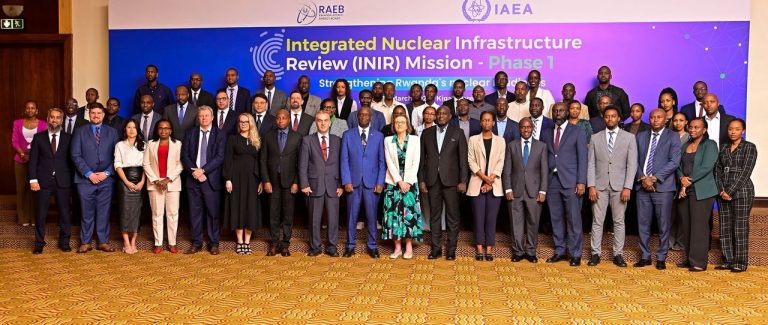
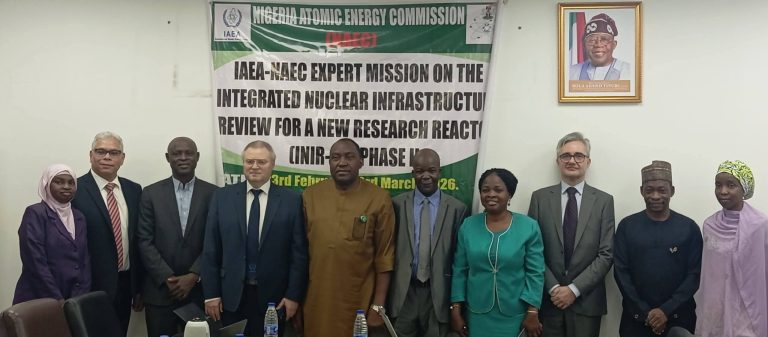
Yet, despite these promising developments, a key question remains unanswered. With the State of the Nation address yet to be delivered, will President Mahama include Ghana’s Nuclear Plans in his address. The timing is crucial because other African nations are also aggressively pursuing nuclear energy. Egypt has already commenced construction of its nuclear facilities, while Kenya, Nigeria, and Rwanda are advancing plans, even though Ghana’s program predates theirs. Failure to accelerate implementation could see Ghana lose its first-mover advantage in the region.
In conclusion, Ghana strategically positions itself to enter the nuclear era, combining sound economic reforms, energy sector improvements, and a clear long-term infrastructure vision. Observers are waiting to see whether President Mahama will take decisive action to finalize vendor selection, advance construction, and cement Ghana’s leadership in Africa’s nuclear future.. The next few months could well determine whether Ghana finally flips the switch on this ambitious and transformative journey.