El-Dabaa
Egypt’s groundbreaking El-Dabaa Nuclear Power Plant project continues to surge forward, marking a year of steady progress in 2025 as construction accelerates across all units and strategic partnerships deepen between Egypt and Russia. Spearheaded by Rosatom, this landmark initiative stands poised to transform Egypt’s energy landscape while driving economic growth and technological collaboration.
Located in Matrouh Governorate on Egypt’s Mediterranean coast, El-Dabaa represents the country’s first commercial nuclear facility and the first new nuclear power project in Africa in decades. When complete, the plant will feature four advanced VVER-1200 reactors—each generating 1,200 MW for a total of 4,800 MW—supplying roughly 10% of Egypt’s electricity demand.
2025: Construction in Full Motion
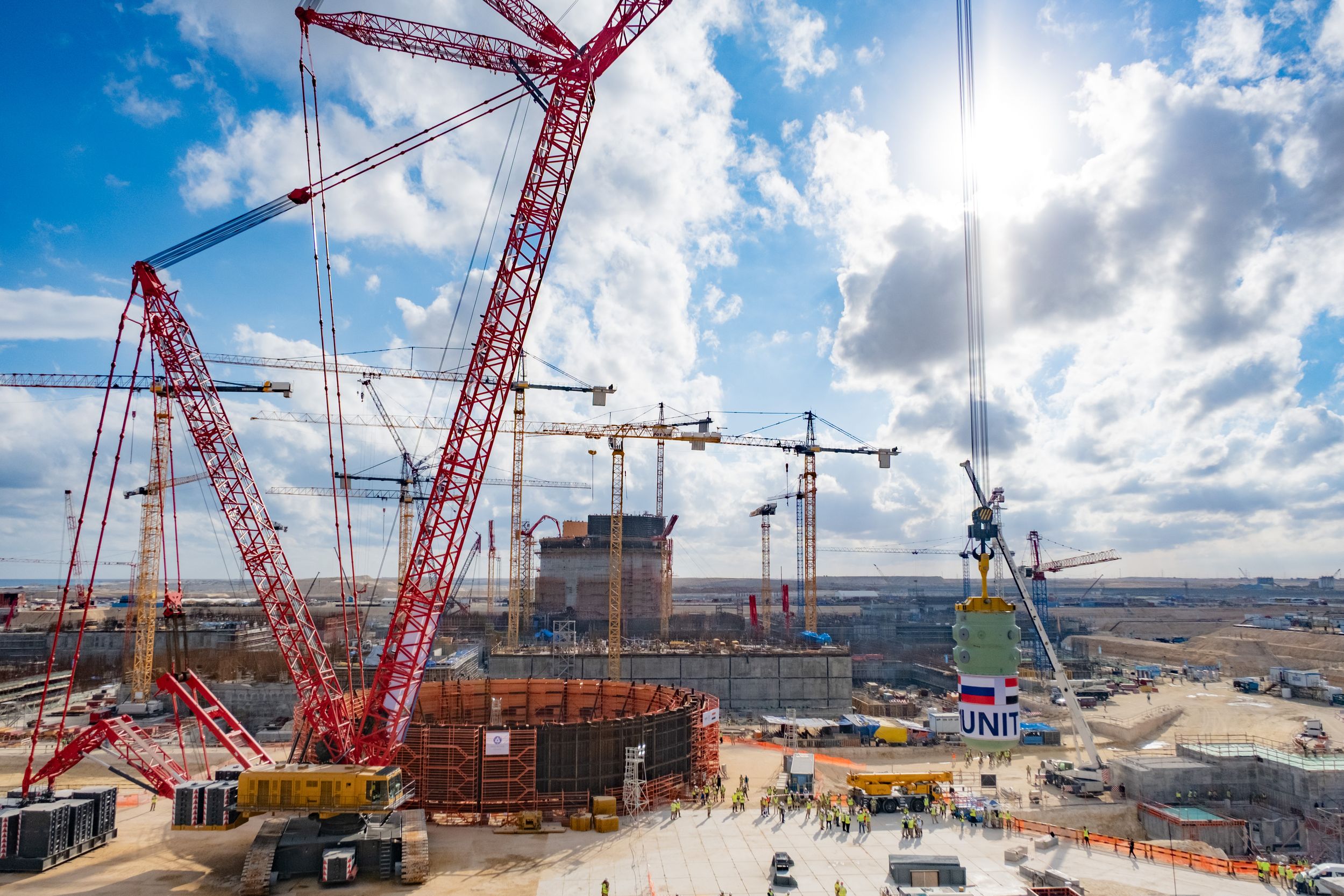
In 2025, Rosatom and Egyptian engineers pushed construction into high gear, culminating in a host of core milestones that reflect both technical achievement and logistical precision. The year’s most noteworthy success came in November 2025, when the reactor pressure vessel for Unit 1 was successfully placed into its final position—a defining moment in the project’s timeline.
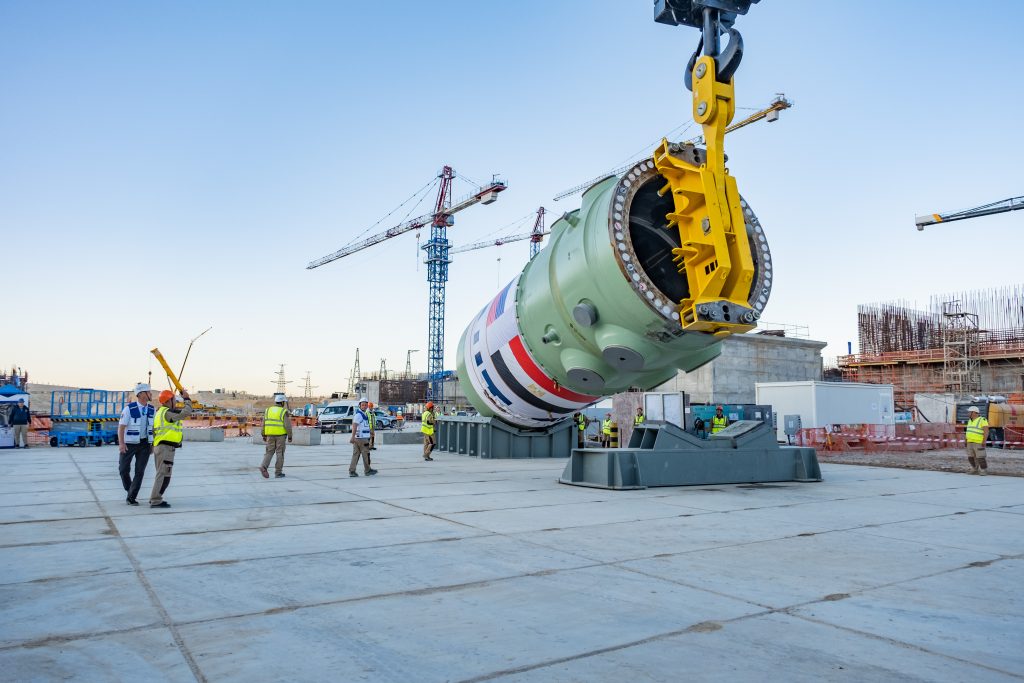
Earlier in the year, Rosatom completed critical fabrication work for Unit 2, including the welding of the upper semi-vessel and installation of the second tier of the inner containment shell (ICS). These containment structures—manufactured in part directly on site—form a critical safety barrier and support essential plant systems. By late May and June, workers had completed concreting and installed higher tiers of the ICS at Unit 2, underscoring consistent progress across phases.
Rosatom engineers also installed a secure local area network (LAN) designed to tie all systems, sensors, and workstations across the plant—a crucial step toward commissioning and long-term operational readiness.
Meanwhile, Unit 4 advanced with the foundation slab for its nuclear service building poured, laying the groundwork for future critical infrastructure that supports controlled access and radiation safety protocols.
Workforce Development and Training
Human capacity building remained a central priority in 2025. Rosatom and Egyptian partner organizations opened a state-of-the-art training center at the site in July. Designed to equip future staff with hands-on experience, the training hub includes full-scale simulators, mechanical and electrical equipment replicas, and lecture spaces for classroom instruction.
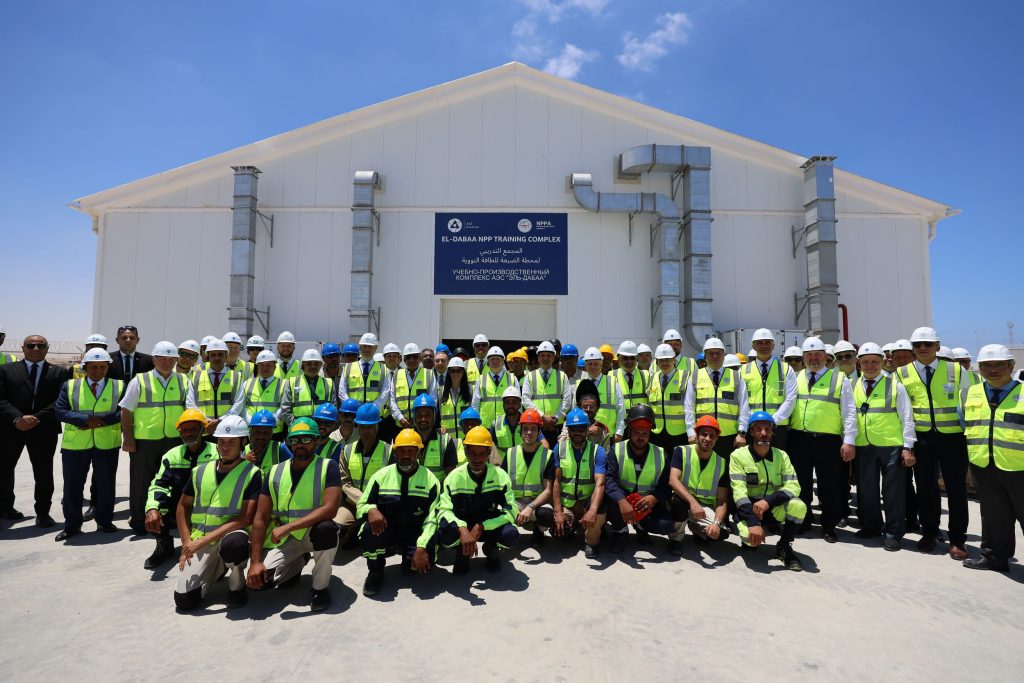
More than an industrial training ground, this facility serves as a testing hub where prospective employees undergo competency assessments before joining construction activities—ensuring safety, workforce readiness, and alignment with international nuclear standards.
Strategic Partnerships and Diplomatic Momentum
Beyond construction, Rosatom expanded its cooperation with Egyptian institutions, signing key agreements and engaging in cultural and educational initiatives. In early 2025, the corporation signed a memorandum of understanding with Benha Electronics, integrating Russian technologies into local manufacturing processes. Later, Egypt and Rosatom collaborated at the 56th Cairo International Book Fair and the International Youth Forum on Green Nuclear Technologies, drawing thousands of participants and online viewers.
High-level diplomatic engagement remained strong. In July, Egyptian President Abdel Fattah el-Sisi and Rosatom Director General Alexey Likhachev reaffirmed the project’s status as a strategic priority during a meeting focused on peaceful nuclear cooperation. Agreements expanded Russia’s role in design, materials supply, and implementation of El-Dabaa’s physical protection systems.
Egypt’s participation in the World Atomic Week forum in Moscow further reinforced bilateral coordination, highlighted by the ceremonial delivery of the latest VVER-1200 reactor vessels for global projects, including El-Dabaa.
Social and Community Impact
Rosatom’s 2025 efforts went beyond construction fences. The company supported local community engagement, ranging from Mediterranean coastal cleanups to family-oriented events like the El Dabaa Kids Sports Festival. Educational initiatives also included international experiences, such as student visits to Russia’s nuclear facilities and participation in the Precise Energy Olympiad, which drew thousands of young Egyptians eager to pursue STEM careers.
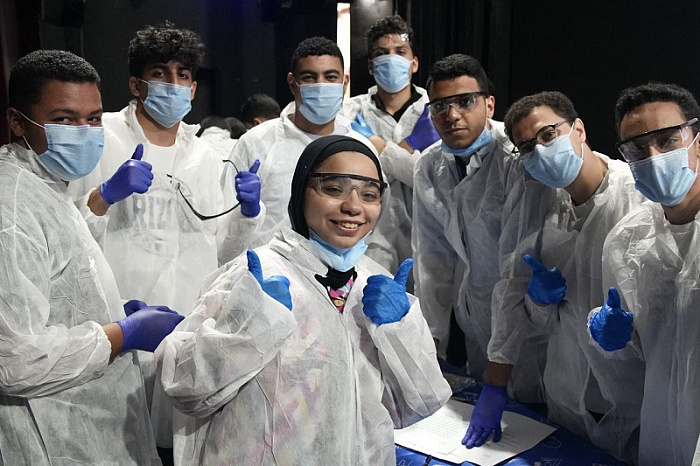
These programs underscore El-Dabaa’s social dimension: growing not only infrastructure but also public awareness, workforce skills, and regional education opportunities.
Looking Ahead
With multiple reactor units advancing concurrently and significant components already onsite, 2026 promises another year of accelerated execution. With Egypt and Russia reaffirming their partnership and global nuclear leaders watching closely, El-Dabaa is quickly becoming a defining example of modern nuclear development in the Middle East and Africa