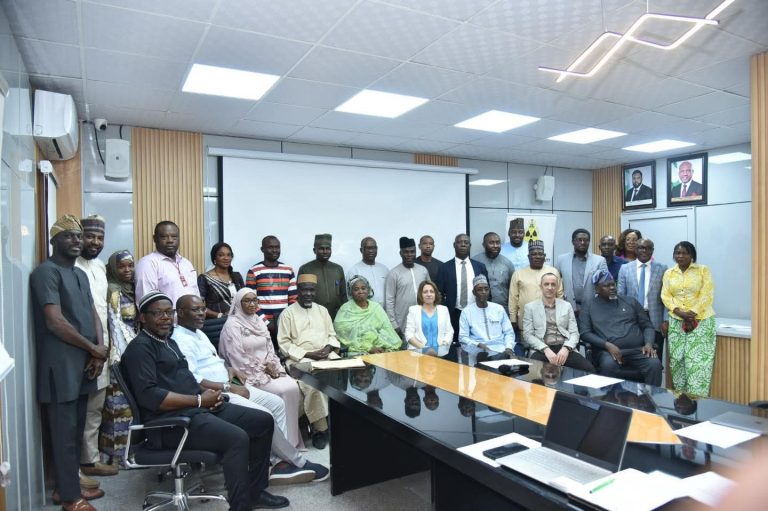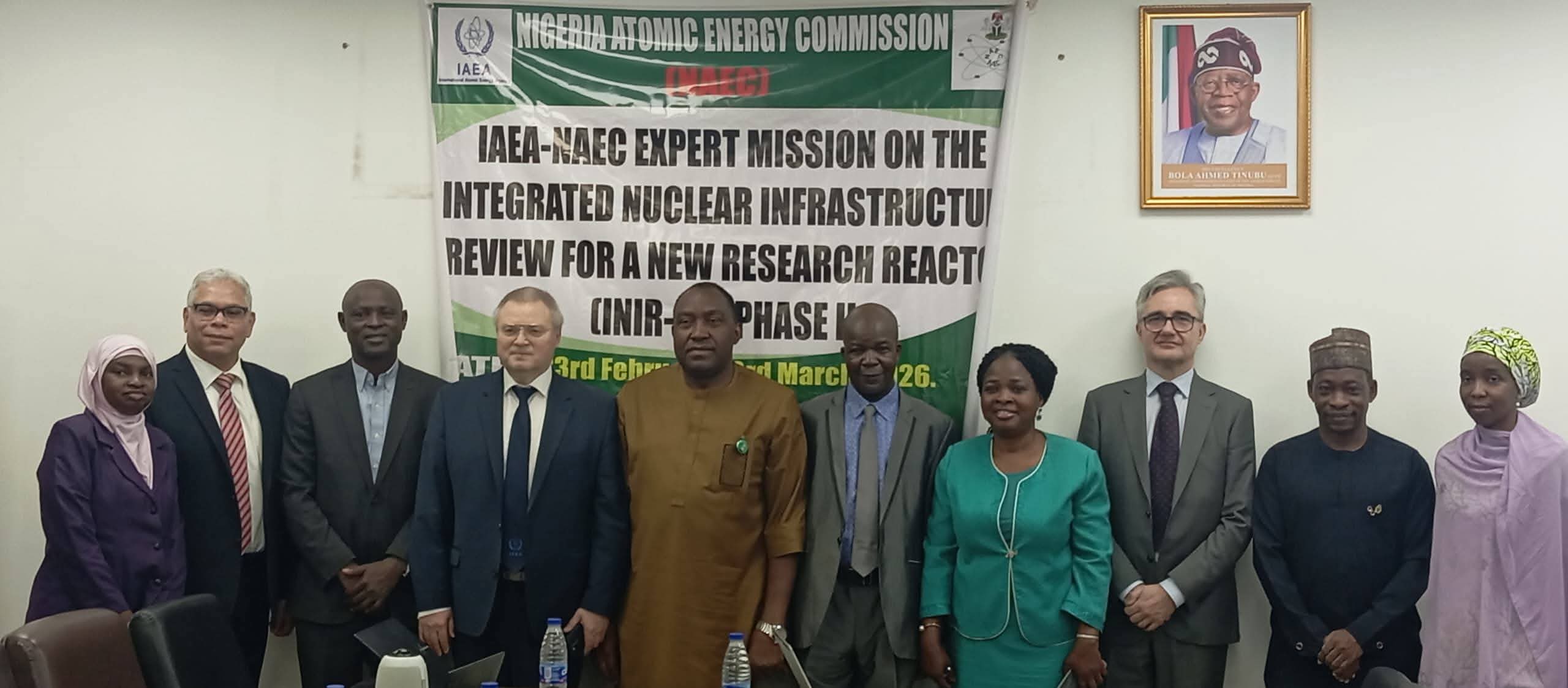
Nigeria has officially advanced its nuclear science and technology agenda as the Nigerian Atomic Energy Commission (NAEC), in collaboration with the International Atomic Energy Agency (IAEA), commenced the Phase-II Integrated Nuclear Infrastructure Review (INIR) for the country’s proposed second research reactor, known as Research Reactor-2 (RR2).
The high-level launch ceremony took place in Abuja, marking a critical milestone in Nigeria’s nuclear infrastructure development, research reactor program, and long-term nuclear energy strategy. The announcement came from NAEC’s Acting Chairman and Chief Executive Officer, Engr. Dr. Anthony Ekedegwa, during his opening address at the Phase-II INIR mission.
What Is the INIR Process?
The Integrated Nuclear Infrastructure Review (INIR) is an IAEA peer-review mechanism that evaluates a country’s readiness to develop nuclear facilities. The review assesses progress across key infrastructure areas, including:
- Nuclear safety and radiation protection
- Nuclear security and safeguards
- Legal and regulatory framework
- Human resource development
- Nuclear research and development capacity
- Radioactive waste management
- Stakeholder engagement and public communication
The Phase-I INIR mission for Nigeria was successfully conducted in 2015. That review examined the foundational infrastructure needed to support Nigeria’s nuclear ambitions. The newly launched Phase-II INIR now focuses on deeper implementation progress, policy coherence, institutional capacity, and readiness to proceed with the proposed Research Reactor-2 project.
Research Reactor-2 (RR2): A Strategic National Asset
NAEC has designated the proposed facility as Research Reactor-2 (RR2). Once completed, RR2 will serve as a multi-purpose nuclear research reactor that supports scientific innovation, technical training, and industrial development.
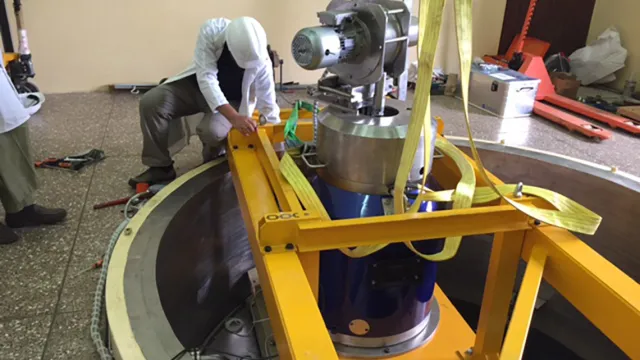
Research reactors differ from nuclear power plants. They do not generate electricity. Instead, they provide neutron beams and irradiation capabilities for:
- Advanced scientific research
- Neutron activation analysis
- Materials testing and fuel qualification
- Nuclear engineering experiments
- Training of nuclear scientists and reactor operators
- Radioisotope production for medicine and industry
RR2 will significantly expand Nigeria’s capacity in nuclear science and technology. The facility will complement the country’s existing research reactor infrastructure and strengthen domestic expertise in nuclear physics, reactor engineering, and radiation applications.
Boosting Medical and Industrial Radioisotope Production
One of the most impactful aspects of the proposed RR2 is its projected ability to produce radioisotopes for medical and industrial applications. Medical radioisotopes play a critical role in cancer diagnosis and treatment, including nuclear medicine imaging and radiotherapy procedures.
Nigeria currently relies heavily on imported radioisotopes for healthcare. Domestic production will:
- Improve access to life-saving cancer diagnostics
- Reduce dependency on foreign supply chains
- Lower costs for hospitals and patients
- Enhance national healthcare resilience
In the industrial sector, radioisotopes support non-destructive testing, quality assurance in oil and gas infrastructure, and industrial radiography. By establishing local production capacity, Nigeria will strengthen its industrial competitiveness and technological independence.
Human Capital Development and Scientific Advancement
RR2 will also serve as a training hub for Nigeria’s next generation of nuclear engineers, reactor physicists, radiation protection specialists, and nuclear regulators. Building a skilled workforce remains essential for sustainable nuclear development.
The INIR Phase-II mission will assess Nigeria’s progress in developing:
- Nuclear education and training programs
- Research institutions and laboratory capacity
- Technical cooperation frameworks
- Regulatory oversight systems
By investing in nuclear human capital development, Nigeria strengthens its long-term nuclear energy roadmap and ensures compliance with international nuclear safety standards.
IAEA Reaffirms Commitment to Nigeria
Leading a three-member IAEA expert delegation, Andrey Sitnikov reaffirmed the Agency’s commitment to supporting NAEC and the Nigerian government throughout the review process. The IAEA provides technical guidance, peer assessment, and advisory services to ensure that nuclear projects align with global best practices and safety requirements.
The Agency’s involvement reinforces transparency, international credibility, and adherence to nuclear safeguards and non-proliferation obligations. Nigeria remains a signatory to international nuclear conventions and continues to cooperate with global nuclear governance mechanisms.
Strengthening Nigeria’s Nuclear Infrastructure
The launch of Phase-II INIR demonstrates Nigeria’s structured and methodical approach to nuclear infrastructure development. The review will evaluate institutional roles, legal frameworks, regulatory independence, emergency preparedness systems, and environmental protection measures.
Strong nuclear governance ensures that research reactors operate safely, securely, and in full compliance with IAEA safety standards. It also enhances investor confidence and international collaboration opportunities.
Nigeria has positioned nuclear science as a catalyst for national development, energy diversification, healthcare improvement, agricultural innovation, and industrial modernization. The proposed RR2 project aligns with broader national strategies that emphasize science-driven economic growth.
A Defining Moment for Nigeria’s Nuclear Future
By launching the Phase-II Integrated Nuclear Infrastructure Review for Research Reactor-2, NAEC signals clear progress in Nigeria’s nuclear research expansion. The successful completion of this review will move the country closer to establishing a modern, multi-purpose research reactor that drives innovation, strengthens healthcare systems, and builds high-level technical expertise.
With IAEA support and strong domestic leadership, Nigeria continues to lay the foundation for a safe, secure, and internationally compliant nuclear future.