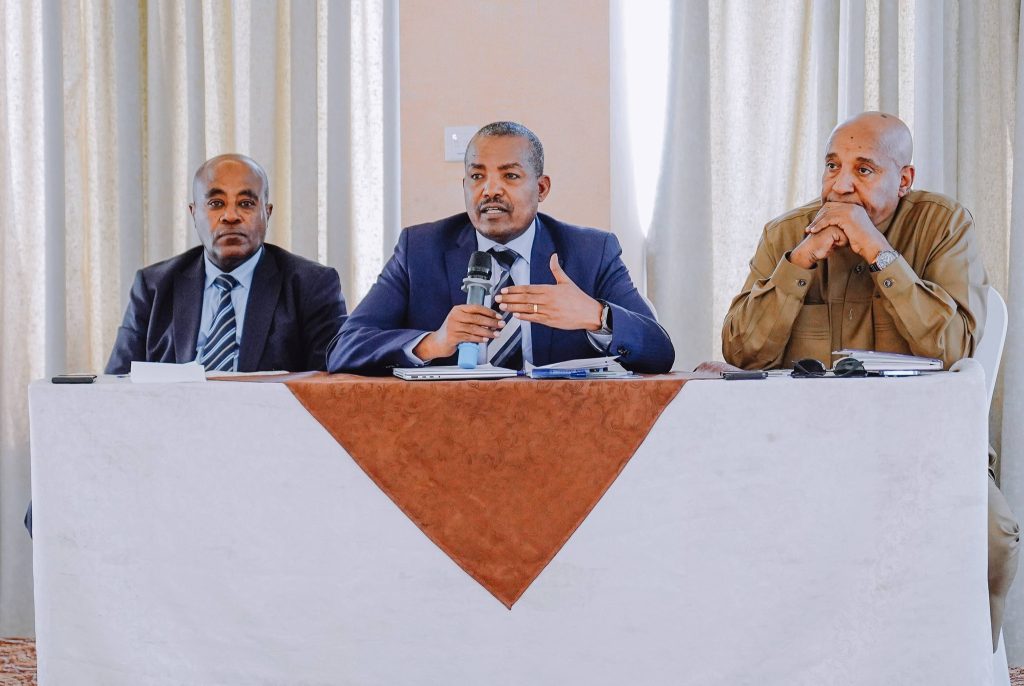
On January 23, 2026, Ethiopia took a decisive step toward building its first nuclear power plant. The Ethiopian Nuclear Energy Commission (ENEC), in collaboration with the Ethiopian Academy of Sciences (EAS), hosted an Inception Report Review and Consultation Workshop on the Nuclear Power Plant (NPP) Construction Site Survey at Elilly Hotel in Addis Ababa.
The workshop brought together senior government officials, national experts, and multidisciplinary technical teams to review and validate the inception report that will guide Ethiopia’s nuclear power plant site survey. This meeting did more than review paperwork; it set the technical and governance foundation for one of the most critical phases of any nuclear power programme — site selection.
Why Site Selection Matters in Nuclear Power Development
In nuclear energy development, site selection determines long-term safety, environmental protection, and economic viability. International experience shows that a poorly selected site can delay projects, inflate costs, or even halt programmes entirely. Ethiopia’s leadership understands this reality and has chosen to anchor its process in international best practice.
During the workshop, participants examined the proposed methodological framework and governance structure for the site survey. They ensured alignment with the site evaluation guidance provided by the International Atomic Energy Agency (IAEA), particularly Safety Standards Series No. SSG-35, which outlines criteria for site survey and site selection for nuclear installations.
By benchmarking its process against IAEA Safety Standards (SSG-35), Ethiopia signaled that it intends to follow a safety-led, internationally aligned approach. This decision strengthens credibility, enhances investor confidence, and supports long-term regulatory compliance.
Technical Streams Under Review
The workshop reviewed multiple technical streams that form the backbone of nuclear power plant site assessment.
1. Seismicity and Geology
Experts evaluated methodologies for assessing seismic hazards, fault lines, soil stability, and regional tectonic conditions. Ethiopia sits within the East African Rift system, a geologically active region. Therefore, robust seismic hazard analysis remains essential. Participants stressed the importance of high-resolution geological mapping, historical seismic data analysis, and probabilistic risk modeling.
2. Hydrology and Environmental Considerations
Water availability plays a central role in nuclear power plant operations. Technical teams examined surface and groundwater studies, flood risk analysis, climate projections, and environmental impact assessment frameworks. Ethiopia must ensure that any proposed site can sustain long-term cooling water needs while protecting surrounding ecosystems.
Environmental protection remains a non-negotiable requirement under IAEA guidance. The workshop emphasized integrating biodiversity studies, climate resilience, and long-term environmental monitoring into the site survey process.
3. Socio-Economic and Land-Use Factors
A nuclear power plant does not exist in isolation. It interacts with communities, industries, and regional development plans. Experts reviewed demographic mapping, land-use patterns, population density data, emergency planning zones, and public infrastructure considerations.
Participants highlighted the importance of stakeholder engagement, transparent communication, and fair land acquisition processes. National ownership and public trust will determine the long-term sustainability of Ethiopia’s nuclear programme.
4. Transport and Grid Infrastructure
Nuclear power plants require robust logistics and grid integration capacity. Teams assessed transport corridors for heavy equipment delivery, proximity to transmission networks, and grid stability requirements.
Ethiopia’s growing electricity demand and regional power export ambitions make grid integration a strategic priority. A properly selected site must connect seamlessly with high-voltage transmission lines and support national energy expansion plans.
5. GIS-Based Multi-Criteria Decision Analysis (MCDA)
One of the most advanced aspects of the review involved the use of Geographic Information Systems (GIS) combined with Multi-Criteria Decision Analysis (MCDA). This data-driven approach allows technical teams to overlay seismic, environmental, socio-economic, and infrastructure data to rank potential sites objectively.
By applying GIS-based MCDA, Ethiopia enhances transparency, minimizes political bias, and strengthens evidence-based decision-making. This approach reflects modern nuclear infrastructure planning practices used in emerging nuclear countries.
Strengthening Institutional Collaboration
Beyond technical review, the workshop reinforced collaboration between ENEC and EAS. This partnership blends regulatory oversight with academic and scientific expertise. It ensures that Ethiopia builds internal technical capacity rather than relying solely on foreign consultants.
Institutional readiness remains one of the International Atomic Energy Agency’s core milestones for new nuclear entrants. By convening national experts and aligning agencies early, Ethiopia accelerates capacity building in nuclear engineering, environmental science, risk assessment, and regulatory governance.

Ethiopia’s Nuclear Ambition in Context
Ethiopia faces rising electricity demand driven by industrialization, urbanization, and population growth. While hydropower dominates its current energy mix, climate variability and drought risks create supply vulnerabilities. Nuclear power offers reliable baseload electricity with low carbon emissions.
By advancing the nuclear power plant site survey process, Ethiopia positions itself among African countries exploring nuclear energy as part of long-term energy security strategies. The workshop marks a tangible shift from policy discussions to technical implementation.
A Safety-Led Path Forward
Participants provided constructive feedback to strengthen the rigor, transparency, and national ownership of the site survey process. They emphasized clear governance structures, documentation protocols, and independent review mechanisms.
ENEC and EAS reaffirmed their commitment to continued cooperation as the programme advances into subsequent implementation phases. The inception report review serves as a launchpad for detailed field investigations, data collection campaigns, and regulatory evaluations.
Ethiopia has now moved beyond ambition and entered structured execution. By aligning with IAEA safety standards, integrating GIS-based decision tools, and mobilizing national expertise, the country demonstrates serious intent to develop nuclear infrastructure responsibly.
The January 23 workshop in Addis Ababa represents more than a meeting. It signals Ethiopia’s strategic, methodical entry into nuclear power plant development — guided by science, anchored in safety, and driven by national development goals.