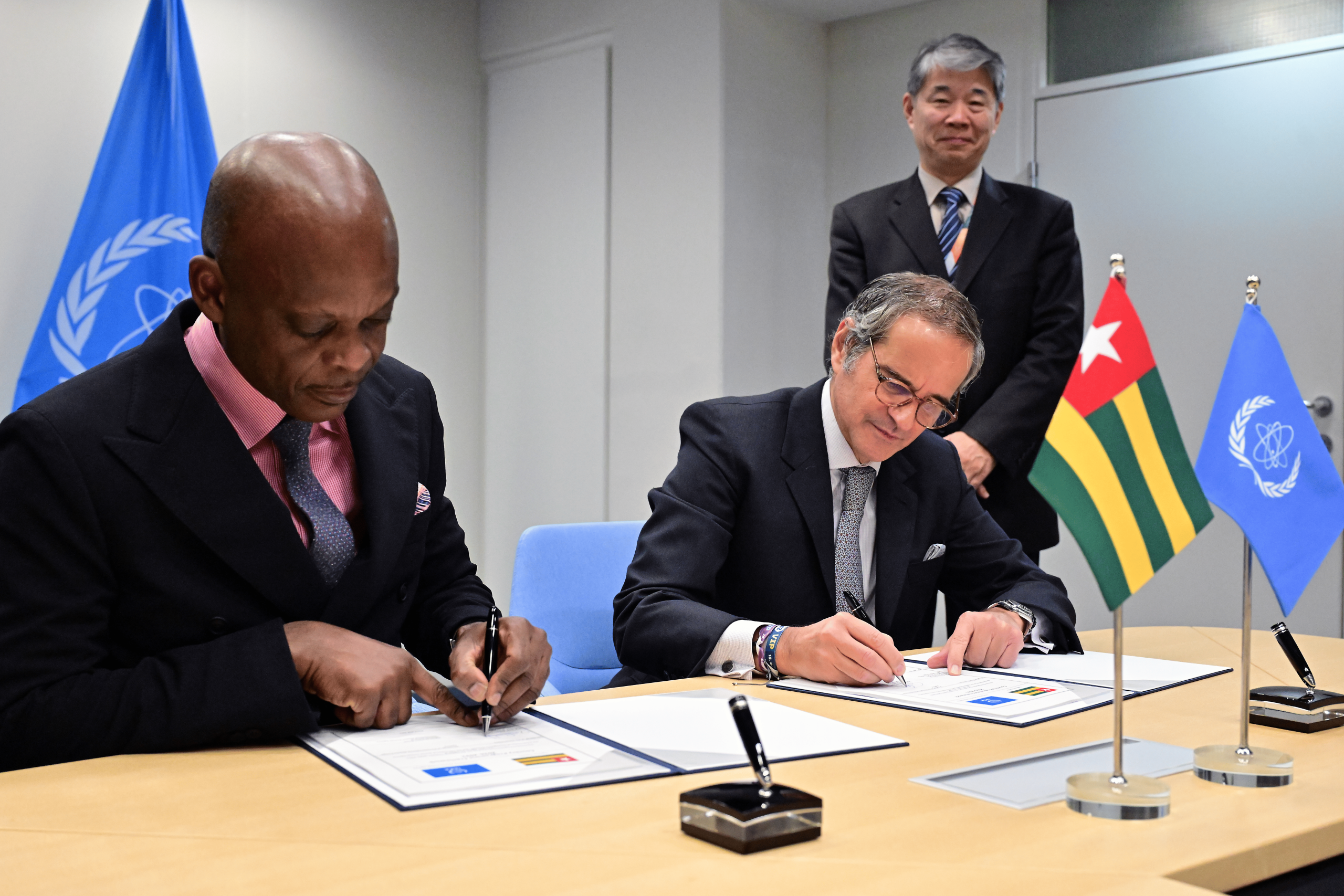
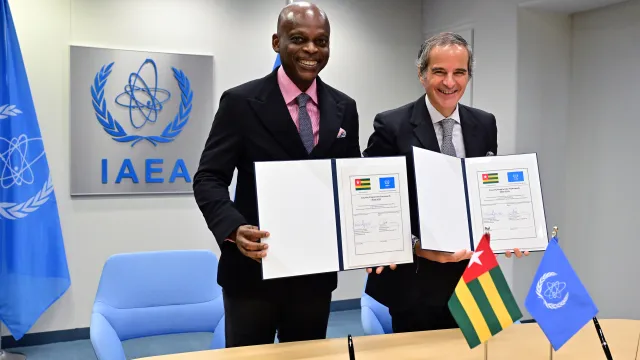
Togo signed its second Togo–IAEA Country Programme Framework 2026–2031 with the International Atomic Energy Agency in Vienna. It did more than formalize a partnership. The Togo–IAEA Programme Framework sent a clear message: nuclear science and technology will play a strategic role in the country’s national development agenda over the next five years.
Officials signed the agreement on 9 February 2026 at the IAEA headquarters in Vienna, reinforcing a collaboration that first took structured shape under the 2020–2025 framework. This new Country Programme Framework (CPF) sets priority areas for cooperation between 2026 and 2031, aligning nuclear applications with Togo’s development goals in agriculture, health, water management, energy, and industry.
What the Togo–IAEA Programme Framework Means
A Country Programme Framework is not just a diplomatic document. It acts as a medium-term strategic roadmap that guides how a country works with the IAEA under its Technical Cooperation Programme. It identifies national priorities and ensures that nuclear technology directly supports economic growth, food security, healthcare improvement, environmental protection, and industrial modernization.
Under the Togo–IAEA Country Programme Framework 2026–2031, the government clearly defined four key priority sectors:
- Food and Agriculture
- Health and Nutrition
- Water and Environmental Management
- Energy and Industrial Applications
By focusing on these sectors, Togo shifts the narrative away from the common misconception that nuclear cooperation automatically means building nuclear power plants. Instead, the framework emphasizes peaceful nuclear applications that deliver measurable development outcomes.
Strengthening Food Security Through Nuclear Techniques
Food security remains a pressing issue across West Africa. Under this framework, Togo can apply nuclear and isotope techniques to improve crop varieties, enhance soil fertility management, and control pests more effectively.
For example, nuclear-based methods such as the Sterile Insect Technique (SIT) help reduce harmful insect populations without relying heavily on chemical pesticides. Isotope hydrology can also help farmers understand soil moisture patterns and optimize irrigation systems.
By integrating nuclear science into agriculture, Togo increases crop productivity, reduces post-harvest losses, and strengthens national food systems. These outcomes directly support sustainable development goals and climate-resilient agriculture.
Expanding Cancer Care and Nuclear Medicine
Health and nutrition form another cornerstone of the Togo–IAEA Country Programme Framework 2026–2031. Across Africa, cancer cases continue to rise, yet access to radiotherapy and nuclear medicine services remains limited.
Through technical cooperation, Togo can expand diagnostic imaging, strengthen radiotherapy infrastructure, and train medical professionals in nuclear medicine. The IAEA often provides equipment, expert missions, and capacity-building programs that help countries improve cancer detection and treatment.
By investing in nuclear medicine and radiation therapy, Togo enhances its public health system and reduces dependency on external referrals for complex treatments. This approach saves lives and builds long-term healthcare resilience.
Managing Water Resources with Isotope Hydrology
Water scarcity and environmental stress challenge many African nations. The new CPF supports isotope hydrology techniques that allow scientists to trace groundwater sources, measure recharge rates, and detect pollution pathways.
These nuclear-based methods provide precise data that traditional techniques cannot easily deliver. With better data, policymakers can design evidence-based water management strategies, protect aquifers, and improve urban planning.
As climate change intensifies rainfall variability, these scientific tools become even more critical. The framework positions Togo to make informed decisions about water sustainability and environmental protection.
Supporting Energy and Industrial Development
While the framework does not immediately focus on nuclear power generation, it strengthens energy-related institutional capacity and industrial applications of radiation technology.
Radiation processing techniques support quality control in manufacturing, sterilization of medical equipment, and materials testing in infrastructure projects. By integrating these technologies, Togo enhances industrial competitiveness and strengthens regulatory systems.
Notably, Togo’s broader nuclear governance efforts continue to mature. The country has expanded its safety and regulatory framework and recently secured a seat on the IAEA Board of Governors for the 2025–2027 term. This position increases its visibility and influence within the global nuclear community.
Building Human Capital and Institutional Capacity
Perhaps the most significant impact of the Togo–IAEA Country Programme Framework 2026–2031 lies in human capacity development. Technical cooperation projects often include scholarships, fellowships, expert exchanges, and on-the-ground training.
These programs create local expertise in nuclear science, radiation safety, environmental monitoring, and medical applications. Instead of importing solutions, Togo builds its own scientific workforce.
For African countries exploring peaceful nuclear technology, this approach provides a strong model. Sustainable nuclear development depends not only on infrastructure but also on regulatory institutions, skilled professionals, and public trust.
Why This Matters for Africa’s Nuclear Future
The Togo–IAEA Country Programme Framework 2026–2031 demonstrates how African nations can strategically leverage nuclear technology without immediately pursuing nuclear power plants. It shows that nuclear science supports agriculture, healthcare, water management, and industrial growth.
Togo’s second CPF signals continuity, policy maturity, and strategic alignment with international standards. The success of this framework will ultimately depend on effective implementation, adequate funding, and strong inter-agency coordination. However, the direction is clear: Togo intends to integrate nuclear science into national development planning.
As more African countries explore nuclear cooperation agreements, Togo’s approach offers a practical case study. It emphasizes peaceful applications, capacity building, regulatory strengthening, and long-term partnership with the International Atomic Energy Agency.
If implemented effectively, the Togo–IAEA Country Programme Framework 2026–2031 could transform how nuclear technology supports sustainable development in West Africa—and position Togo as a growing voice in Africa’s nuclear science landscape.