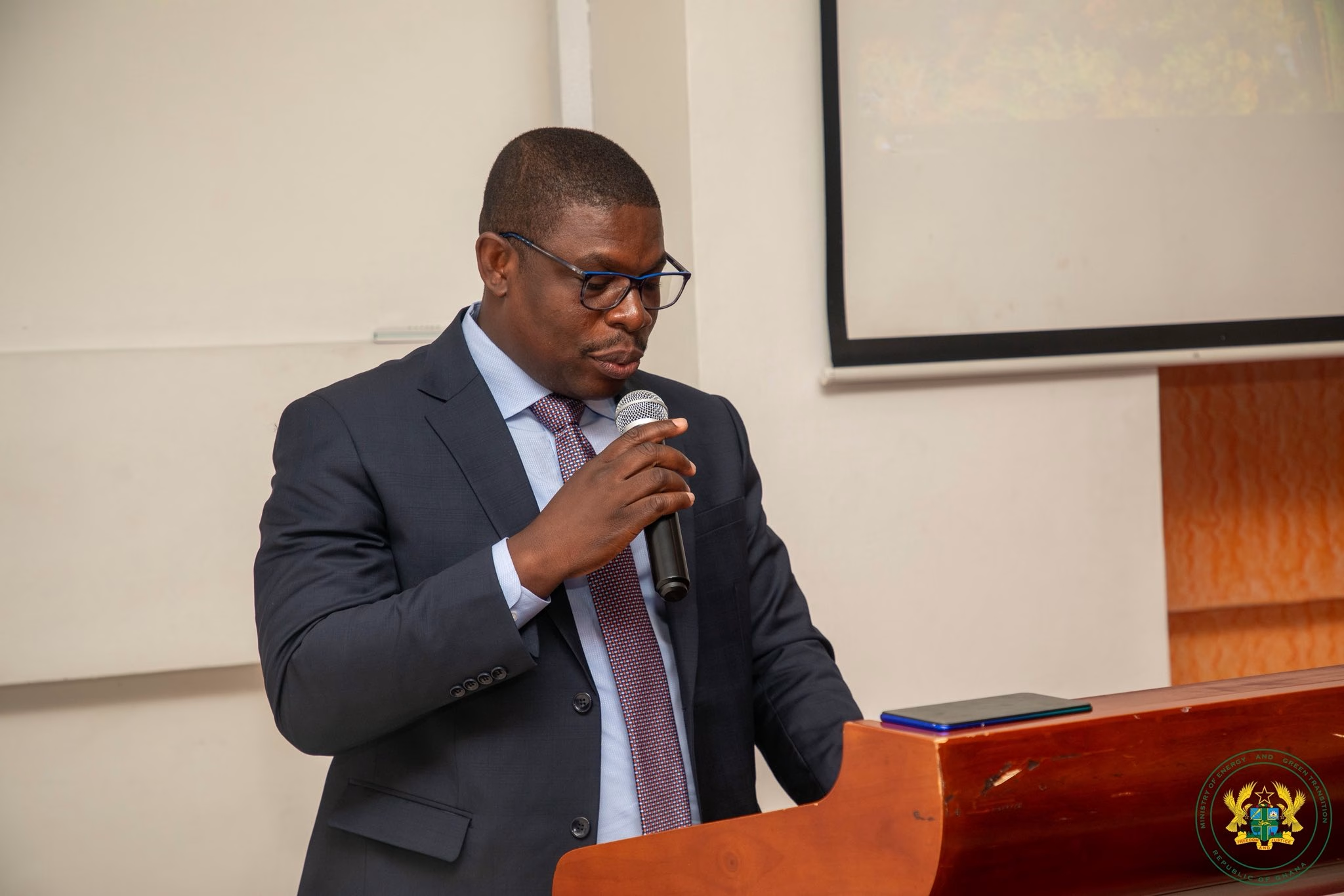
On September 9, 2025, during the launch of the 9th Edition of the Ghana Energy Awards, Deputy Minister of Energy and Green Transitions Hon. Richard Gyan-Mensah provided a comprehensive update on the nuclear power program’s advancement. His remarks highlighted several critical milestones achieved in recent months, particularly regarding site preparation and vendor engagement. He emphasized that recent changes are repositioning the Ghanaian energy sector as a pillar of national development, describing the energy sector as a foundation for socio-economic growth rather than merely an enabler of development. His speech outlined significant steps in Ghana’s energy diversification strategy and confirmed progress in elevating the proposed Owner and Operator of the Nuclear Power Plant to a State Authority.
The Deputy Minister confirmed that Ghana has made substantial progress in finalizing site acquisition for both the preferred and backup locations designated for nuclear power plant construction. This site selection process represents a crucial component of Phase 2 requirements under the IAEA Milestone approach, which establishes international standards for countries developing nuclear power programs.
Vendor Selection Process Expands to Include Russia
The most significant development announced by Deputy Minister Gyan-Mensah was the expansion of Ghana’s vendor engagement strategy. While the country had previously focused discussions on two international partners—a Chinese company handling the Large Nuclear Reactor and an American firm managing the Small Nuclear Reactor (Small Modular Reactor or SMR)—recent diplomatic and commercial developments have introduced a third potential collaborator. The SMR is being considered with an industrial hub surrounding it, where large industries will serve as initial consumers of the power, providing a substantial boost to Ghana’s growing industrial sector.
Nuclear Power Ghana had already established formal relationships with both initial vendors, including the execution of framework agreements designed to facilitate deeper technical and commercial discussions. These preliminary agreements provide the foundation for more detailed negotiations regarding reactor technology, financing arrangements, and long-term operational support.
However, the Deputy Minister revealed that Russia has demonstrated considerable interest in participating in Ghana’s nuclear power development program. Russia has proposed a hybrid power plant that combines solar and nuclear power, similar to a “FPSO Power Batch” concept. While Russia has a significant nuclear power program, including the world’s first floating nuclear power plant, and has implemented some solar-hybrid systems with hydropower plants, there are no publicly documented instances of combining nuclear and solar energy in a single hybrid power project to date.
In response to this diplomatic outreach, the Ministry of Energy and Green Transitions has scheduled a formal visit to Russian nuclear industry representatives at the end of September 2025 to initiate preliminary discussions and assess the proposed technology.
This expansion of potential vendor partnerships reflects Ghana’s commitment to evaluating multiple technological and financing options before making final decisions regarding nuclear power infrastructure.
Critical Questions and Concerns
During the vendor selection process conducted by Ghana several years ago, all companies that submitted bids received thorough attention and critical evaluation of their proposals. The country subsequently selected two finalists from China and the United States. This raises important questions: What has changed? Why the sudden interest in Russian technology?
The inclusion of Russian nuclear technology providers adds another dimension to the country’s assessment process, potentially offering alternative reactor designs, financing mechanisms, and operational support models.
Several critical questions emerge regarding this development: Will the new Russian technology result in lower costs than existing tariffs paid by Ghanaians, given that electricity tariff ratios in the country are already considered high? What are the potential consequences of this late-stage vendor addition?
Ghana has made significant progress toward its 2028 construction goal. Will this new interest cause delays in work already completed? Given that the Russian hybrid nuclear-solar technology appears to be uncommercialized, it is crucial for the country to carefully consider this factor, particularly as Ghana is a newcomer to nuclear power. Is the country’s Nuclear Regulatory Authority prepared to handle this type of technology, considering the regulatory work already invested in the existing vendor technologies?
There are concerns that the Russian technology proposal may divert attention and delay Ghana’s Nuclear Power Programme, which is positioned to make Ghana the first nuclear power generator in West Africa and establish the country as a regional leader.