In an era where the applications of nuclear science extend far beyond energy production to health, agriculture, and environmental management, institutions like Ghana’s School of Nuclear and Allied Sciences (SNAS) have become pivotal. Established in 2006, SNAS operates under the University of Ghana, Legon, in collaboration with the Ghana Atomic Energy Commission (GAEC). As a leading institution in West Africa, SNAS is building a highly skilled workforce equipped to meet the region’s scientific, technological, and industrial needs.
The Mandate of SNAS
SNAS was conceived to bridge the critical gap in expertise required to harness nuclear science and technology for sustainable development. It focuses on providing postgraduate education and specialized training in nuclear and allied sciences, contributing to Ghana’s aspirations for economic growth and regional leadership in the field. The school addresses sectors such as energy, healthcare, agriculture, and environmental protection, making it a cornerstone of Ghana’s scientific ecosystem.
Cutting-Edge Programs at SNAS
SNAS offers a range of graduate-level programs tailored to meet the needs of various industries. These include M.Phil. and Ph.D. programs in:
- Nuclear Science and Technology: Equipping students with knowledge in nuclear energy, material science, and reactor technology.
- Radiation Protection: Training professionals to ensure safety in the use of radioactive materials.
- Nuclear Engineering: Developing expertise in the engineering aspects of nuclear reactors and systems.
- Medical Physics: Supporting advancements in diagnostic radiology, nuclear medicine, and radiation oncology, crucial for modern cancer treatment.
- Environmental Science: Enabling graduates to use nuclear techniques for environmental monitoring and pollution control.
- Nuclear and Radiochemistry: Focusing on the chemistry of radioactive materials and their applications in industry and medicine.
These programs integrate theoretical learning with practical exposure, leveraging the infrastructure at GAEC.
World-Class Facilities
One of the defining features of SNAS is its access to the advanced facilities at GAEC. These include:
- A nuclear reactor, which serves as a research and training platform.
- Laboratories for radiological analysis, nuclear instrumentation, and isotopic studies.
- Equipment for radiation monitoring and environmental sampling, enabling cutting-edge research.
Global and Regional Partnerships
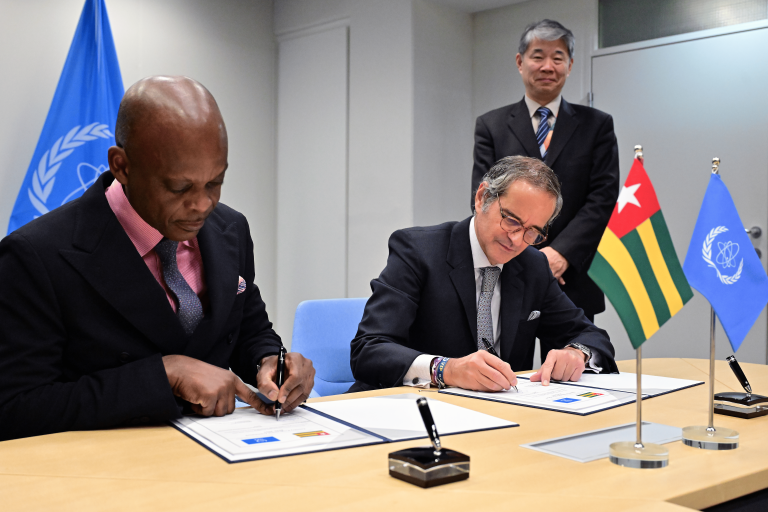
SNAS’s success is bolstered by strategic partnerships with global organizations, such as the International Atomic Energy Agency (IAEA). Through these collaborations, SNAS receives technical support, training materials, and funding, further enhancing its programs. Additionally, the school works with the African Regional Cooperative Agreement for Research, Development, and Training (AFRA) to promote regional capacity building in nuclear science.
Such collaborations not only enhance the institution’s offerings but also foster a community of nuclear experts across Africa, addressing shared challenges and opportunities in the field.
Driving Sustainable Development
SNAS’s contributions to sustainable development are multifaceted:
- Energy Development: By training nuclear engineers and scientists, SNAS supports Ghana’s ambition to incorporate nuclear power into its energy mix.
- Healthcare Advancements: Programs in medical physics are strengthening Ghana’s healthcare system, particularly in cancer diagnostics and treatment.
- Environmental Protection: Nuclear and radiochemical applications enable precise environmental monitoring, essential for tackling pollution and climate change.
As Ghana moves closer to integrating nuclear power into its energy strategy, the role of SNAS becomes even more critical. By building a robust pipeline of nuclear professionals, the school ensures the sustainability of such projects while minimizing associated risks. Its focus on regional collaboration positions it as a hub for nuclear science education and research in Africa, attracting talent from across the continent.

Ghana’s School of Nuclear and Allied Sciences stands at the forefront of a transformative movement, empowering Africa with the knowledge and skills to harness nuclear science for sustainable development. Its programs, partnerships, and cutting-edge facilities make it a beacon of excellence in the field. As the demand for nuclear expertise continues to grow, SNAS’s contributions will undoubtedly play a pivotal role in shaping the future of science and technology in Ghana and beyond.