Food preservation is an age-old practice that aims to extend the shelf life of food and maintain its nutritional value, safety, and sensory properties. One of the most innovative methods employed in modern food preservation is radiation technology, commonly referred to as food irradiation. This technique uses ionizing radiation to kill bacteria, parasites, and other microorganisms, slow down ripening, and prevent spoilage without compromising the food’s quality. In this article, we will explore how radiation technology works, its benefits, its applications, and the safety considerations surrounding its use in food preservation.
How Radiation Technology Works
Radiation technology in food preservation involves exposing food to controlled levels of ionizing radiation, typically gamma rays, electron beams (e-beams), or X-rays. These types of radiation have enough energy to remove electrons from atoms and molecules, leading to the creation of charged particles (ions). When food is exposed to ionizing radiation, it disrupts the DNA of harmful microorganisms such as bacteria, fungi, and parasites, effectively killing them or rendering them inactive. Additionally, radiation can also alter the chemical structure of food, slowing down enzymatic processes that cause spoilage and ripening, thereby prolonging the shelf life of the product.

There are three primary types of ionizing radiation used in food irradiation:
- Gamma Rays – These are emitted by radioactive isotopes such as Cobalt-60 or Cesium-137. Gamma rays penetrate deep into food, making them ideal for bulk and packaged products.
- Electron Beams (E-beams) – These are streams of high-energy electrons generated by a linear accelerator. E-beams have a limited penetration depth, making them suitable for surface treatment of food.
- X-rays – Similar to gamma rays, X-rays are a form of electromagnetic radiation but are generated by machines rather than radioactive materials. They offer a balance between deep penetration and controlled doses.
Benefits of Radiation Technology in Food Preservation
- Microbial Safety: One of the key benefits of food irradiation is its ability to eliminate harmful microorganisms, including foodborne pathogens like Salmonella, E. coli, and Listeria. By reducing the microbial load, radiation technology helps in preventing foodborne illnesses, making food safer for consumption.
- Extended Shelf Life: By slowing down the growth of bacteria and fungi, radiation helps delay spoilage, extending the shelf life of perishable foods like fruits, vegetables, meats, and seafood. This is especially useful for reducing food waste and improving food security.
- Pest Control: Irradiation is effective in eliminating pests such as fruit flies and insects in grains, dried fruits, and spices. This helps prevent infestation and maintains the quality of stored food.
- Retention of Nutrients and Taste: Unlike some preservation methods such as canning, radiation causes minimal changes in the nutritional content of food. In fact, radiation can help preserve vitamins, flavors, and textures, making it a non-intrusive preservation method compared to heat-based techniques.
Applications of Radiation Technology in Food Preservation
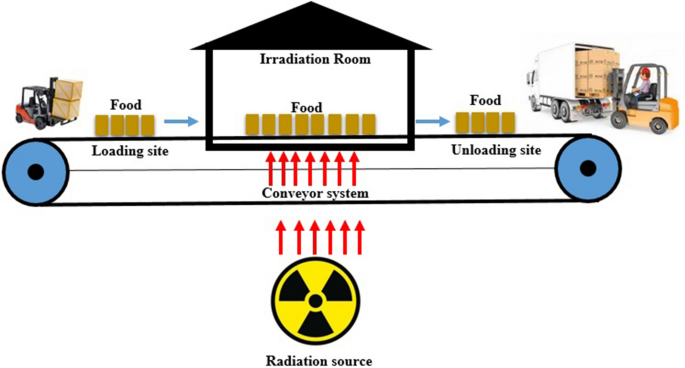
Food irradiation has a wide range of applications, from meat and poultry to fruits, vegetables, and spices. Some of the most common uses include:
- Meat and Poultry: Radiation helps in reducing pathogens like Salmonella and Campylobacter in raw meat, ensuring better food safety.
- Fruits and Vegetables: Radiation slows down the ripening process of fruits like mangoes, bananas, and tomatoes, preserving their shelf life and reducing spoilage during transportation.
- Spices: Spices are prone to contamination by bacteria and insects. Irradiation is an effective way to sterilize spices without altering their flavor or aroma.
- Grains and Legumes: Radiation is used to kill weevils and other pests in stored grains and dried legumes.
Safety Considerations and Regulations

The safety of food irradiation has been extensively studied and endorsed by numerous health organizations, including the World Health Organization (WHO), the Food and Agriculture Organization (FAO), and the U.S. Food and Drug Administration (FDA). According to these authorities, food irradiation is safe when conducted under controlled conditions, and it does not make food radioactive. The process involves exposing food to carefully calibrated doses of radiation, well below the levels that would cause harm to human health.
However, consumers are often wary of irradiation due to misconceptions. It is essential for food products treated with radiation to be clearly labeled, allowing consumers to make informed choices. The symbol commonly used to denote irradiated food is the “radura,” a circle with a green color, often accompanied by the words “treated with irradiation.”