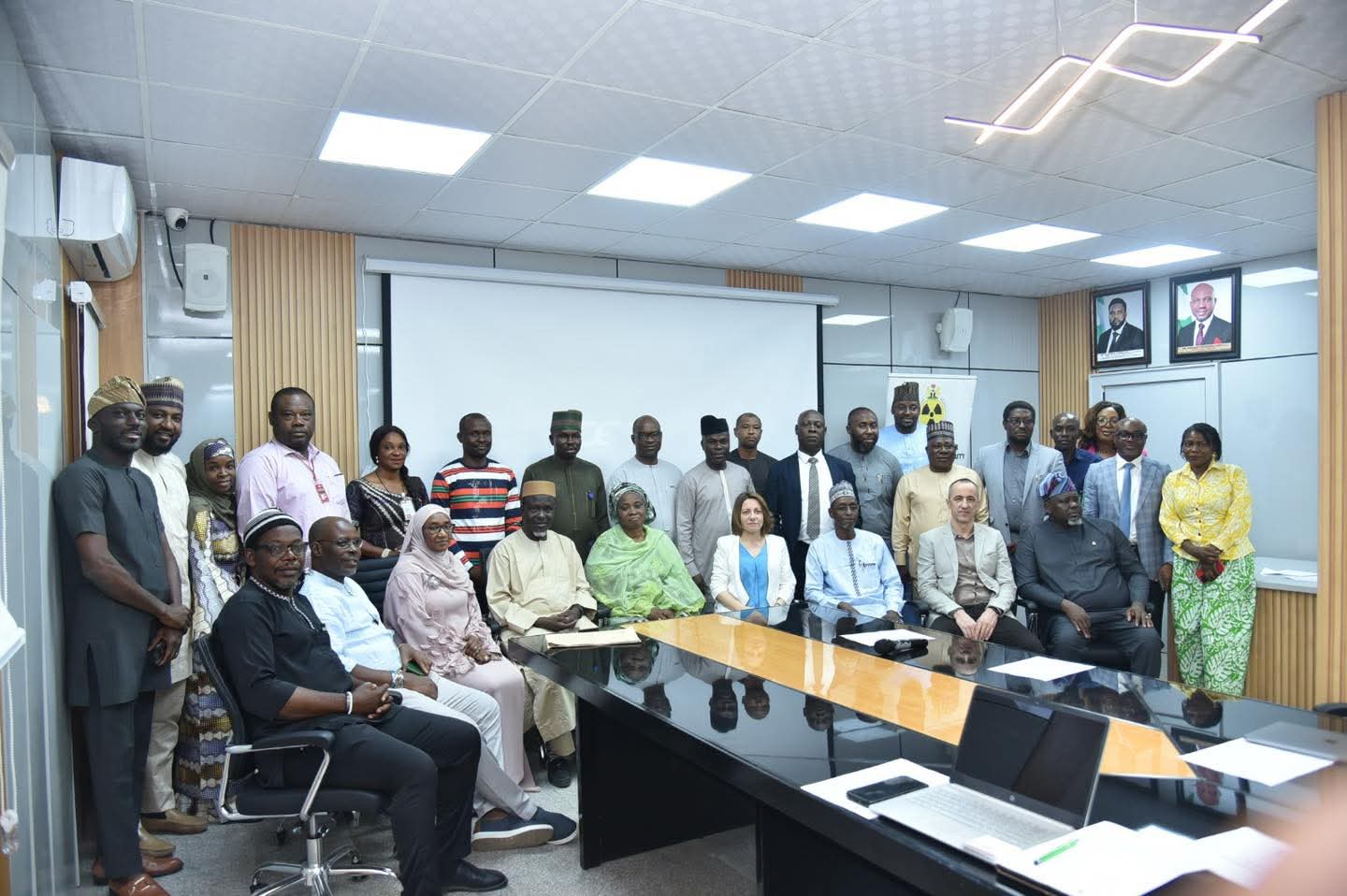
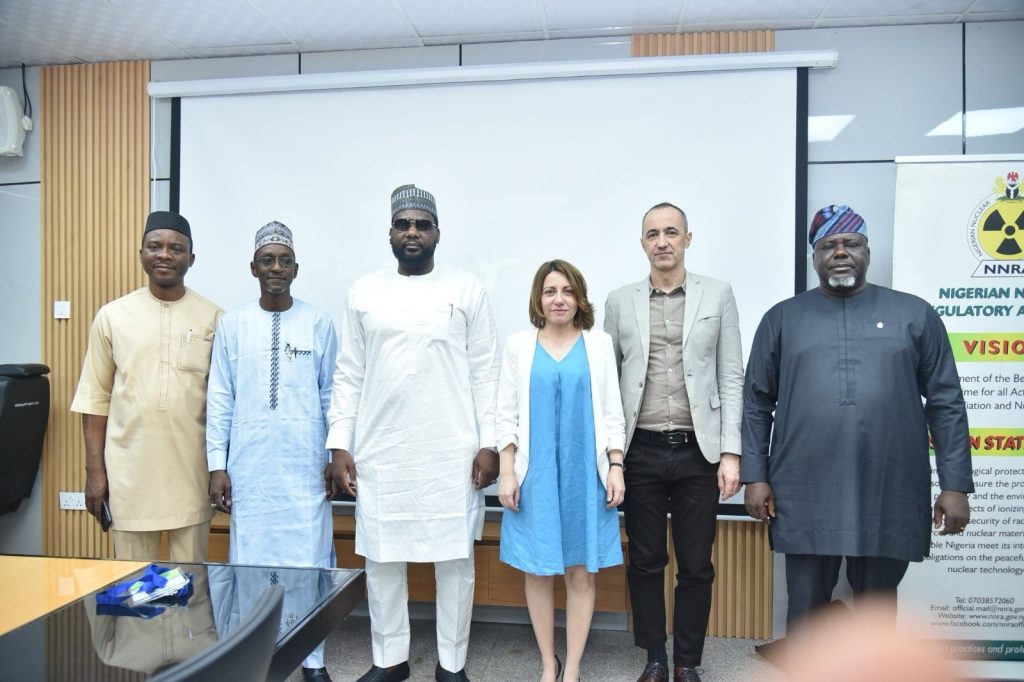
Nigeria has taken another decisive step toward strengthening its nuclear governance framework as the Nigerian Nuclear Regulatory Authority (NNRA), in collaboration with the European Union (EU), convened a high-level stakeholder workshop in Abuja to review the draft National Nuclear and Radiation Safety Policy and Strategy. The two-day event, held from February 24–25, 2026, at the headquarters of the Energy Commission of Nigeria in Abuja, forms a key deliverable under the EU-funded Instrument for Nuclear Safety Cooperation (INSC) Project.
This development signals Nigeria’s growing commitment to nuclear safety, radiation protection, regulatory independence, and international compliance as the country expands the use of nuclear technology in medicine, agriculture, industry, research, and future nuclear power generation.
Strengthening Nigeria’s Nuclear Safety Framework
The Nigerian Nuclear Regulatory Authority serves as Nigeria’s independent nuclear regulator, responsible for nuclear safety, radiation protection, security of radioactive sources, and compliance with international standards. In partnership with the European Union, the Authority organized this workshop to critically examine and validate the draft National Nuclear and Radiation Safety Policy and Strategy.
Speaking on behalf of the NNRA Chief Executive Officer, Mr. Farouq Ingawa, General Manager of the Radiological Safety Department, emphasized the workshop’s core objective: to rigorously review the draft policy framework, clearly define institutional mandates, eliminate overlaps, and integrate expert recommendations to produce a comprehensive and nationally accepted document.
He stated that the final policy will play a pivotal role in the effective implementation of nuclear safety regulations, radiation control measures, and regulatory oversight mechanisms across Nigeria. By strengthening governance structures, the country aims to ensure the safe use of radioactive materials in hospitals, oil and gas operations, construction, academia, and other critical sectors.
EU Support Through the INSC Project
The workshop forms part of the EU-funded Instrument for Nuclear Safety Cooperation (INSC), a global initiative designed to enhance nuclear safety culture, regulatory capacity, emergency preparedness, and radiation protection in partner countries. Through technical assistance, policy advisory support, and institutional capacity building, the EU continues to support Nigeria’s efforts to align its nuclear regulatory framework with International Atomic Energy Agency (IAEA) safety standards and global best practices.
EU cooperation in nuclear safety strengthens transparency, accountability, and risk management systems. It also reinforces Nigeria’s readiness to manage nuclear technology responsibly, especially as discussions around nuclear power development, small modular reactors (SMRs), and energy diversification continue to gain momentum across Africa.
Harmonizing With Global Nuclear Standards
In his opening remarks, Dr. Mustapha Abdullahi, Director-General of the Energy Commission of Nigeria, welcomed delegates and reaffirmed the Commission’s dedication to advancing Nigeria’s nuclear energy roadmap. He described the draft policy as a crucial instrument for harmonizing Nigeria’s nuclear safety architecture with international regulatory frameworks.
Nigeria is a signatory to multiple international conventions on nuclear safety, radiation protection, and nuclear security. Therefore, aligning national policies with IAEA safety fundamentals and global nuclear governance principles remains essential for maintaining credibility, attracting international partnerships, and ensuring safe nuclear technology deployment.
By clearly defining the roles of regulatory bodies, technical agencies, security institutions, and emergency response organizations, the draft policy seeks to eliminate regulatory ambiguity and strengthen inter-agency coordination.
Broad-Based Stakeholder Participation
The Abuja workshop brought together representatives from relevant ministries, security agencies, technical bodies, radiation protection experts, policymakers, and nuclear professionals. Participants engaged in intensive review sessions to evaluate policy provisions covering:
- Nuclear regulatory independence
- Radiation safety standards
- Radioactive waste management
- Emergency preparedness and response
- Nuclear security infrastructure
- Compliance monitoring and enforcement
- Public health protection measures
Through collaborative dialogue and technical review, stakeholders identified areas requiring refinement and provided structured feedback to improve clarity, enforceability, and operational efficiency.
This inclusive validation process enhances transparency and promotes national ownership of the policy. It also ensures that Nigeria’s nuclear safety strategy reflects practical realities across sectors where radiation and nuclear applications operate.
Why This Policy Matters for Nigeria’s Energy Future
Nigeria continues to explore nuclear power as part of its long-term energy diversification strategy. With rising electricity demand, energy security challenges, and climate change pressures, nuclear energy presents a low-carbon baseload power option that could complement renewable energy sources such as solar and hydro.
However, nuclear power development requires a strong regulatory backbone, robust safety culture, and comprehensive radiation protection laws. The draft National Nuclear and Radiation Safety Policy and Strategy provides the foundation for these critical components.
Beyond power generation, nuclear technology already supports cancer treatment through radiotherapy, improves crop productivity through mutation breeding, enhances food preservation, and supports industrial radiography in infrastructure projects. Ensuring strict safety protocols protects workers, the public, and the environment.
A Milestone in Nigeria’s Nuclear Governance Journey
The validation of the draft policy marks a significant milestone in Nigeria’s nuclear governance evolution. By leveraging EU technical support and domestic expertise, the country strengthens its regulatory capacity and reinforces its commitment to international nuclear safety compliance.
As Nigeria advances toward expanding nuclear applications and exploring nuclear power development, a clear, enforceable, and internationally aligned safety framework becomes indispensable.
The Abuja stakeholder workshop demonstrates proactive leadership in nuclear regulation, radiation safety, and institutional coordination. It positions Nigeria as a responsible emerging nuclear nation committed to safety, security, and sustainable development.
With the finalization and implementation of the National Nuclear and Radiation Safety Policy and Strategy, Nigeria moves closer to establishing a safe, secure, transparent, and globally respected nuclear environment.
Credit, RB Kefas
Abuja.